
Why Your Offer Matters in Marketing
Your marketing can look polished and still fail to move people if your offer is unclear. A business may have strong photos, active social profiles, and a website, but visitors still wonder: What exactly am I getting? Who is this for? What should I do next? That confusion often points to an offer problem.
An offer is more than a discount or catchy promotion. It is the reason someone should pay attention and consider working with you. It explains what you provide, who it helps, what makes it useful, and how the customer can begin. When your offer is clear, your website, content, and follow-up have a stronger message to build around.
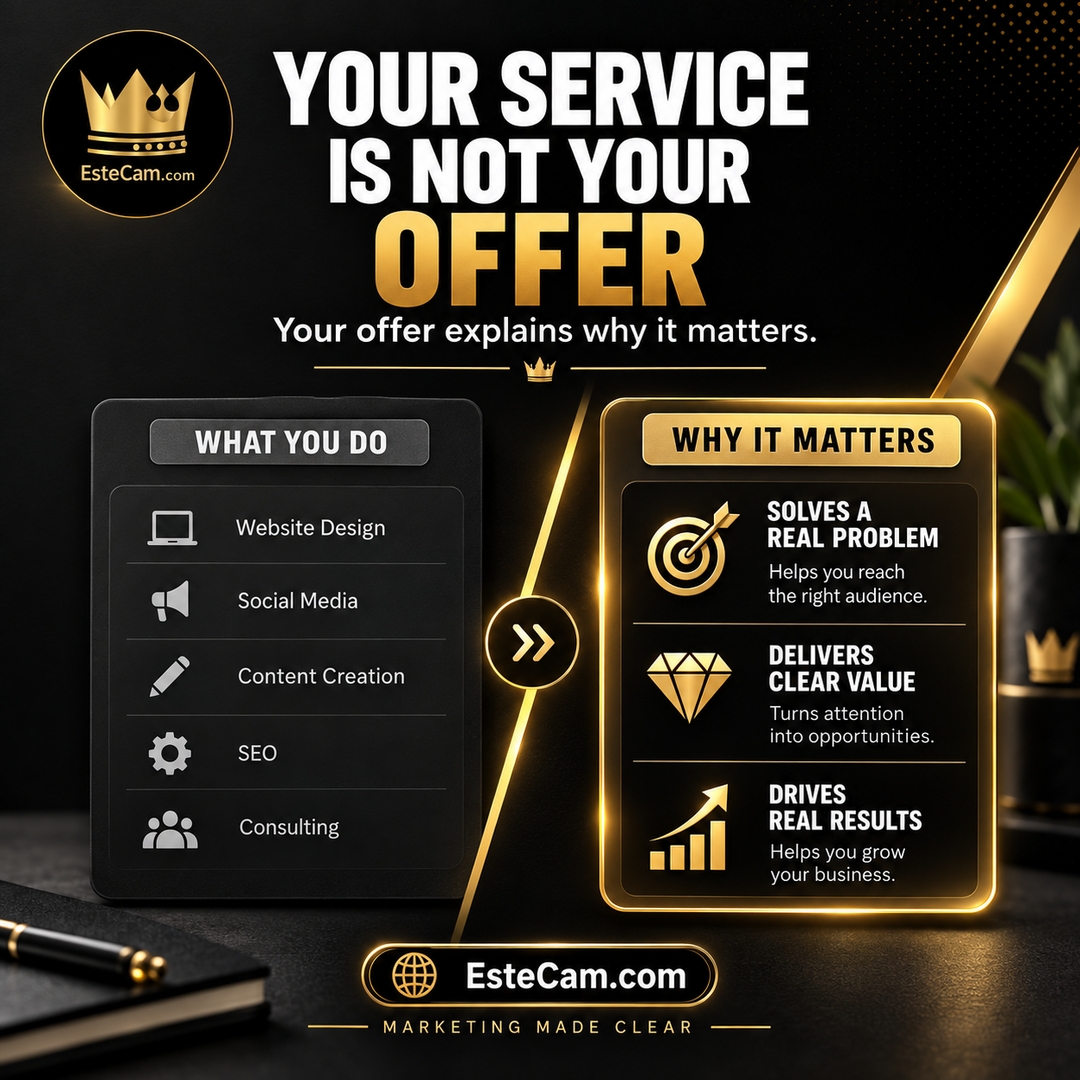
Why Service Alone Is Not Enough
Many businesses describe services rather than offers. A contractor says “home improvement.” A cleaning company says “residential cleaning.” A consultant says “business consulting.” These descriptions may be accurate, but they leave too many questions. Customers want to know what problem you solve and what the next step will be.
A clearer offer gives context. Instead of only saying “website design,” a marketing agency might explain that it helps small businesses create a clearer website with stronger calls-to-action and a simple way for visitors to inquire. Instead of only saying “cleaning services,” a cleaner might describe help preparing a home for move-in, move-out, or regular maintenance. The goal is not to make the service sound bigger. It is to make the value easier to understand.
A Strong Offer Reduces Decision-Making
Potential customers are often comparing options while distracted, busy, or unsure what they need. If they have to piece together your service, process, and next step from multiple pages, they may leave before contacting you.
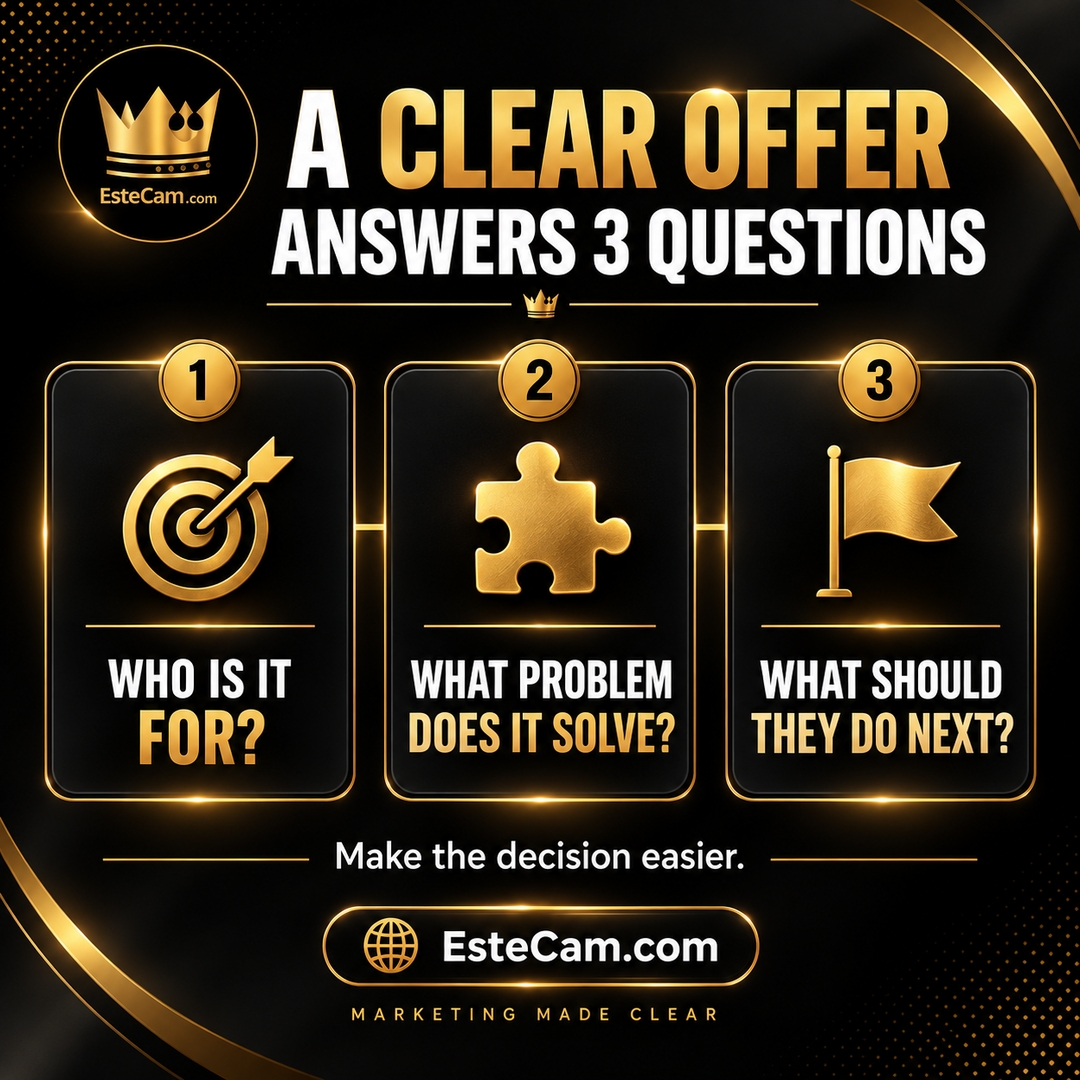
A good offer answers important questions quickly:
What is this?
Is it for someone like me?
What problem does it address?
What is included or expected?
What should I do next?
You do not need to answer every detail in one sentence, but your marketing should make the path easy to follow. Clear messaging helps the right people recognize that your business may fit their needs.

Your Offer Shapes Your Ideal Customer
An offer also helps you attract better-fit inquiries. Broad wording can bring attention from people who are not ready, not qualified, or looking for something different. Specific wording gives potential customers a clearer way to decide whether to continue.
For example, “marketing support for local service businesses that need a clearer website and better lead follow-up” speaks to a more defined audience than “full-service marketing.” It makes the problem and audience easier to recognize.

Use One Clear Offer Across Your Marketing
Your offer should not change completely from one platform to another. Your homepage, service pages, social media posts, email messages, and CRM follow-up should reinforce the same promise.
This consistency matters because people rarely make a decision after seeing only one piece of content. Someone may discover you through a social post, visit your website later, and fill out a form days afterward. If each step uses a different message, the customer may not know whether they found the same business or the right solution.
Start with a simple core message, then adapt its length and tone for each channel. A social post can highlight the problem. A landing page can explain the details. A follow-up message can remind the person what they asked about and what happens next.

A Clear Offer Needs a Clear Next Step
Even a useful offer can lose momentum if the call-to-action is vague. “Learn more” may be appropriate sometimes, but customers often need more specific direction. Depending on the offer, the next step could be requesting a quote, booking a consultation, submitting details, joining a list, or starting a free website.
The CTA should match the customer’s level of readiness. Someone still learning may need an educational page. Someone who understands the problem may be ready to request information. Give visitors a clear, logical path instead of asking everyone to take the biggest step immediately.
You Do Not Need to Rely on Discounts
A strong offer does not have to mean lowering your price. A discount may attract attention, but clarity, convenience, a defined process, helpful guidance, or a better-fit package can make a service easier to choose.
Before changing your price, review how your offer is explained. Can a visitor tell what is included? Is the audience clear? Are the expectations realistic? Does the website answer common questions? Sometimes the issue is not the service itself but the way it is packaged and communicated.
Check Your Offer from a Customer’s Point of View
Read your homepage or main service page as if you have never heard of your business. Within a few seconds, can you tell what the business does, who it helps, and what action to take?
Then look for gaps. Replace general phrases with specific language. Show the problem your service addresses. Explain what happens after someone reaches out. Remove extra choices that distract from the main step. Make sure your form, phone number, or booking link works on mobile.
Your offer should also match the actual customer experience. If your marketing promises a simple process but your form is long and confusing, the message and experience work against each other. A practical marketing strategy connects the promise, the website, lead generation, and customer follow-up.
Your Offer Gives Marketing Direction
Your offer matters because it gives your marketing a clear job. It helps customers understand the value of your service, decide whether it fits, and know what to do next. Without a clear offer, even good content and a professional online presence can feel disconnected.
Define the problem you solve, the people you help, what the customer can expect, and the next step. Then use that message consistently across your business website, local SEO content, social media marketing, and customer follow-up.
Ready to make your business look more professional online? Start My Free Website with EsteCam.
FAQs
1. What is an offer in marketing?
An offer is the complete reason someone should consider working with your business. It explains what you provide, who it helps, what problem it addresses, what value the customer can expect, and what step they should take next. An offer is more than a discount or promotion.
2. How is an offer different from a service?
A service explains what your business does, while an offer explains why that service matters to a specific customer. For example, “website design” describes a service. An offer could explain that you help small businesses create a clearer website with stronger messaging and an easier way for visitors to inquire.
3. Why does an offer matter in marketing?
Your offer gives your marketing a clear direction. It helps customers understand your value, decide whether your business fits their needs, and know what to do next. It also gives your website, social media, content, and follow-up a consistent message to communicate.
4. What should a clear marketing offer include?
A clear offer should identify the target audience, explain the problem being addressed, describe the value, clarify what is included or expected, and provide a logical next step. These details help customers understand the offer without having to search through multiple pages.
5. How can an offer help attract better-fit customers?
Specific wording helps potential customers recognize whether your business is right for them. Instead of using broad phrases like “full-service marketing,” explain who you help and what problem you solve. This gives better context to people who are actively looking for that type of support.
6. Does a strong offer need to include a discount?
No. A strong offer does not have to rely on lowering the price. Clarity, convenience, helpful guidance, a defined process, or a better-fit package can also make a service easier to understand and choose.
7. Where should I use my offer?
Your core offer should appear consistently across your homepage, service pages, social media posts, email messages, landing pages, and CRM follow-up. The wording can be adjusted for each platform, but the main promise should remain connected.
8. What makes a good call-to-action for an offer?
A good call-to-action clearly tells customers what to do next. Depending on their level of readiness, the next step may be requesting a quote, booking a consultation, submitting information, joining a list, or starting a project. The CTA should match the offer and the customer’s needs.
9. How quickly should visitors understand my offer?
Visitors should be able to understand what your business does, who it helps, and what action to take without reading every page. Review your homepage from the perspective of someone unfamiliar with your business and remove general wording that creates confusion.
10. How can I improve my offer?
Start by identifying the problem you solve, the people you help, the value you provide, and the next step customers should take. Replace vague phrases with specific language, explain what happens after someone contacts you, remove unnecessary choices, and make sure your website works clearly on mobile.
