Your About Page Is Not for You, It’s for Your Prospect
Your About page should not read like a company history assignment.
For many small businesses, the About page becomes a place to talk about when the business started, who founded it, and what the owner cares about. Some of that can be useful, but only when it helps the visitor feel more confident about choosing you.
The truth is simple: your About page is not really for you. It is for your prospect.
When someone clicks your About page, they are usually trying to answer one quiet question: “Can I trust this business?” They may already know what service you offer. They may have checked your homepage, reviews, photos, or pricing. Now they want to know who is behind the business, how you work, and whether you feel like the right fit.
That means your About page has a real job. It should build trust, explain your value, and help the right customer feel comfortable taking the next step.
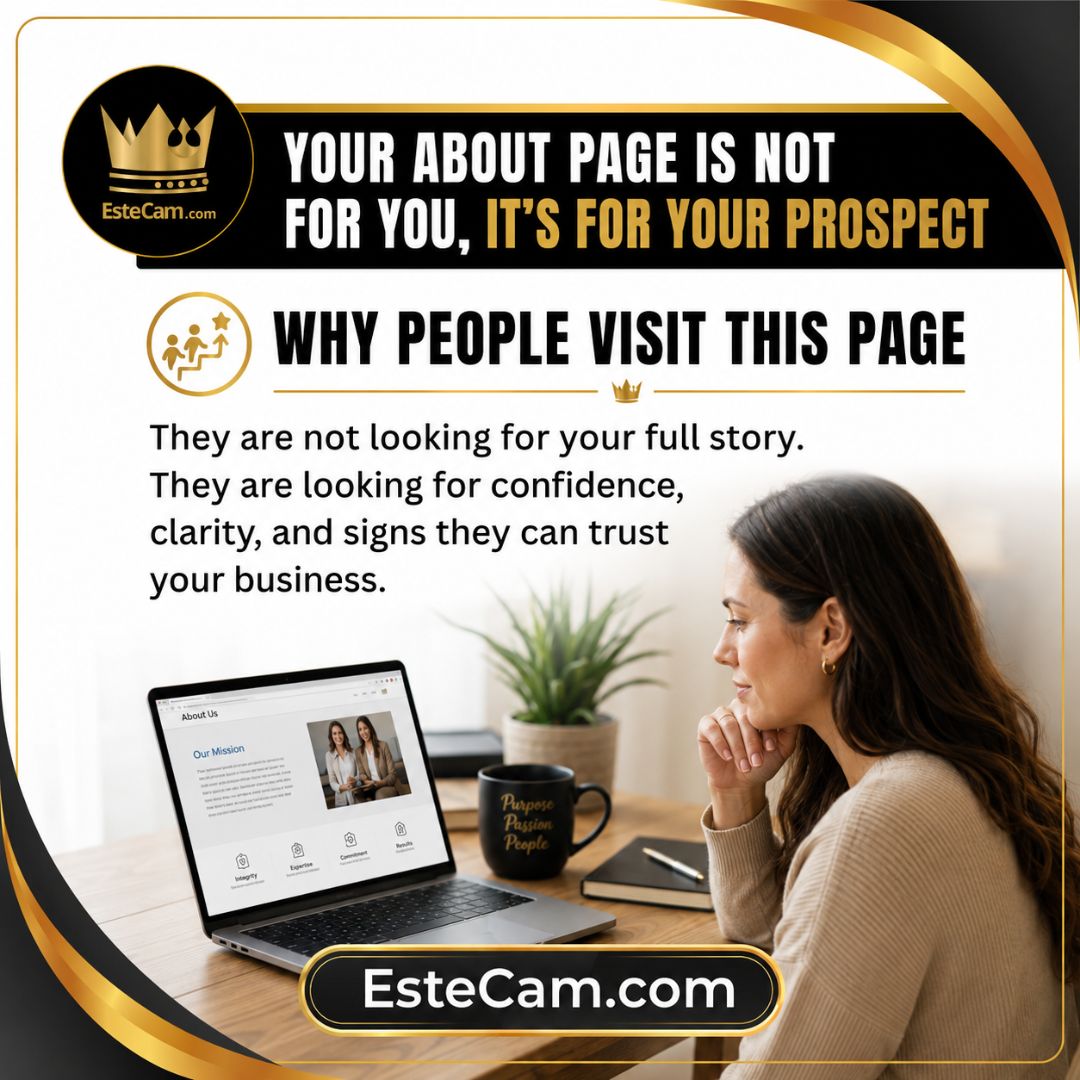
Why People Visit This Page
Most visitors are not looking for your full life story. They are looking for confidence.
A homeowner may want to know if a contractor is reliable before requesting an estimate. A local shopper may want to know if a store feels professional before visiting. A business owner may want to know if a marketing agency understands small businesses before starting a conversation.
People often choose local businesses based on comfort, clarity, and connection. They want to feel like there are real people behind the brand. They want to know you understand their problem. They want to see signs that you can help.
A strong About page does not make the business owner the hero. It makes the customer feel seen.
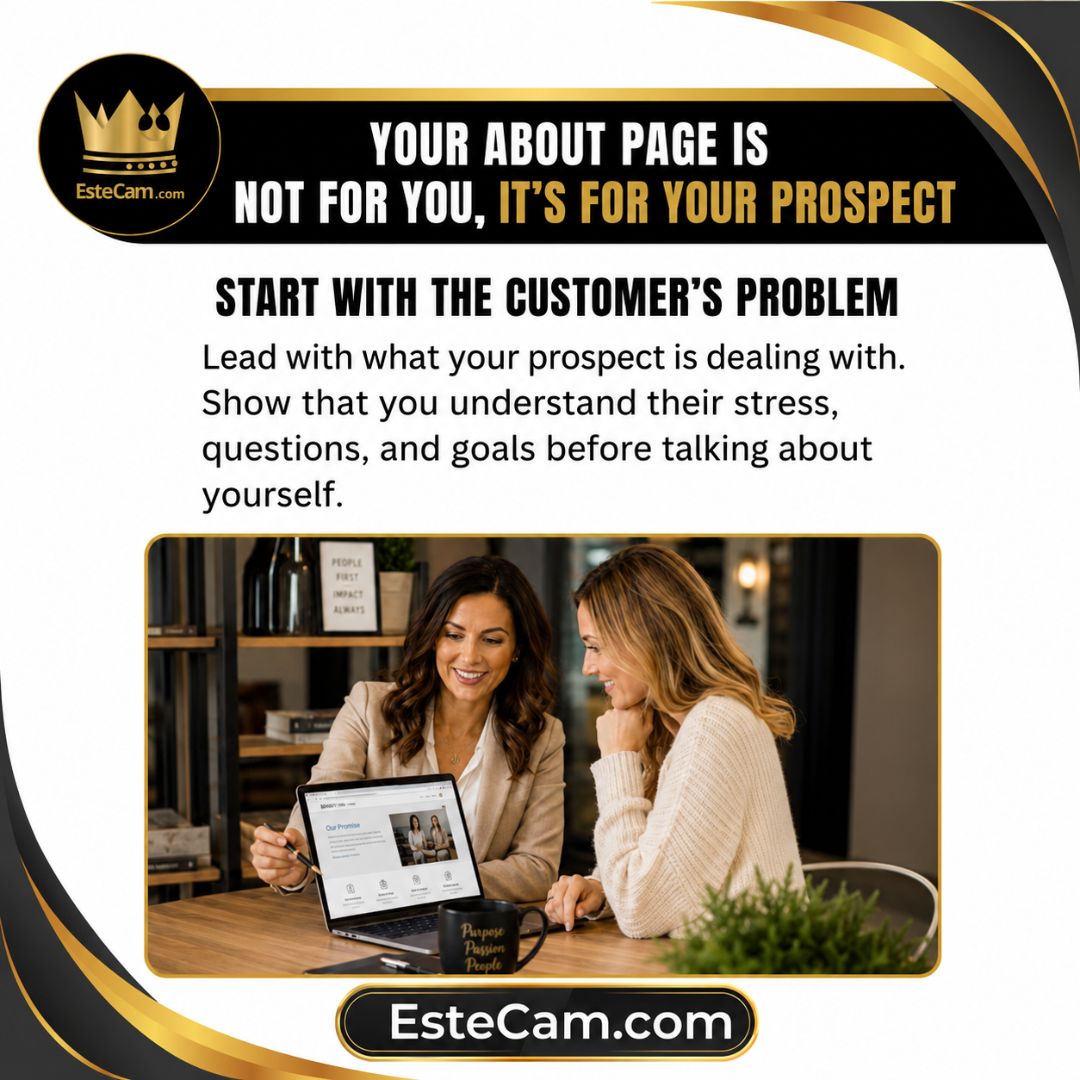
Start With the Customer’s Problem
Before you talk about yourself, talk about what your prospect is dealing with.
Instead of opening with, “We were founded in 2016,” a service business could say, “Finding a reliable team should not feel stressful. You need clear communication, honest service, and someone who shows up ready to help.”
That kind of opening connects with the reader right away. It tells them you understand what matters to them. Once they feel understood, they are more likely to care about your background, experience, and story.
This does not mean your story has no place. It means your story should support the customer’s decision. Explain why you started, what problem you wanted to solve, and how your experience helps customers today.
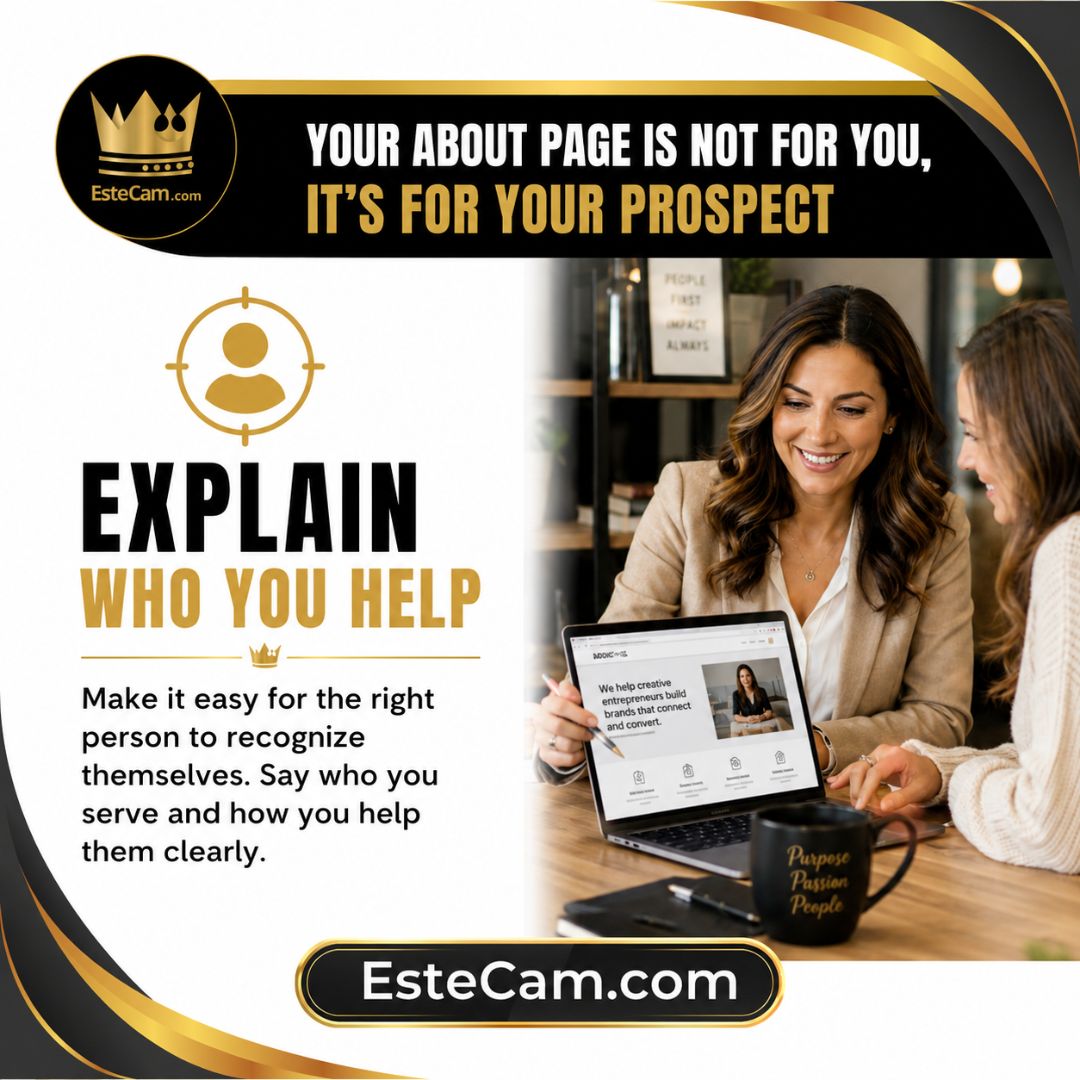
Explain Who You Help
Your About page should make it easy for the right person to recognize themselves.
If you serve homeowners, say that. If you help small businesses, say that. If you work with local service providers, store owners, contractors, or growing teams, make it clear.
A vague About page says, “We help everyone.” A stronger one says, “We help busy small business owners improve their online presence without making marketing feel overwhelming.”
That sentence tells the reader, “This business understands people like me.”
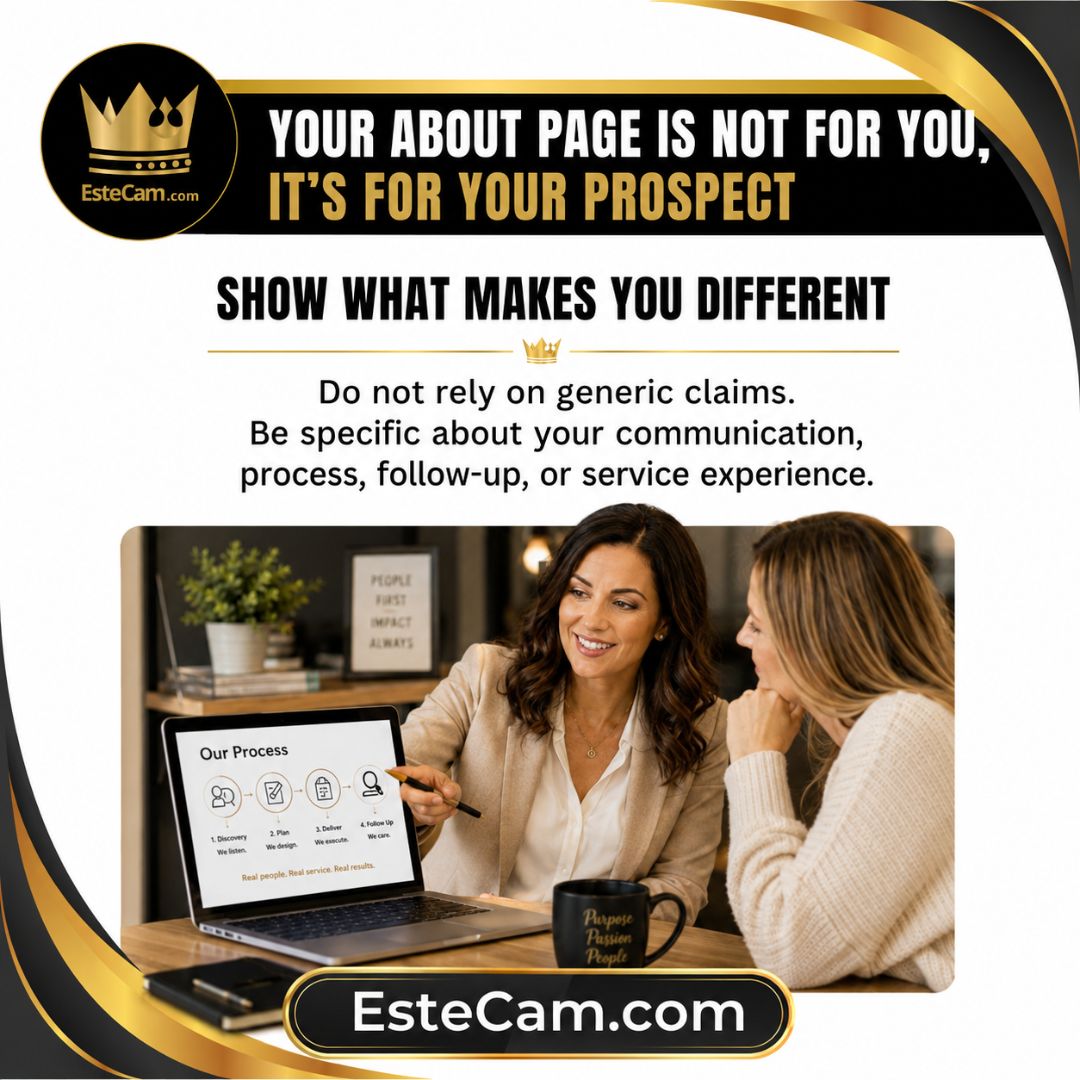
Show What Makes You Different
A good About page should answer, “Why should I choose you instead of another option?”
You do not need to sound bigger than you are. You do not need dramatic claims. You just need to be clear.
Maybe your business is known for fast communication, clean work, simple pricing, friendly service, local knowledge, organized follow-up, or personalized support. Maybe customers choose you because you explain things clearly and make the process easy.
Those details matter because they help people compare.
Instead of saying, “We care about quality,” explain what that looks like. Do you double-check the work? Do you send reminders? Do you explain the next step?
Specific details build more trust than generic statements.
Add Proof Without Overdoing It
Your About page should include trust signals, but it should not feel like a brag sheet.
You can mention years of experience if it matters. You can mention your local area, types of customers served, team background, reviews, certifications, photos, or examples of work. The goal is to make the visitor feel safer choosing you.
Photos can also make a big difference. A real team photo, owner photo, storefront photo, or behind-the-scenes image can make your business feel more human.
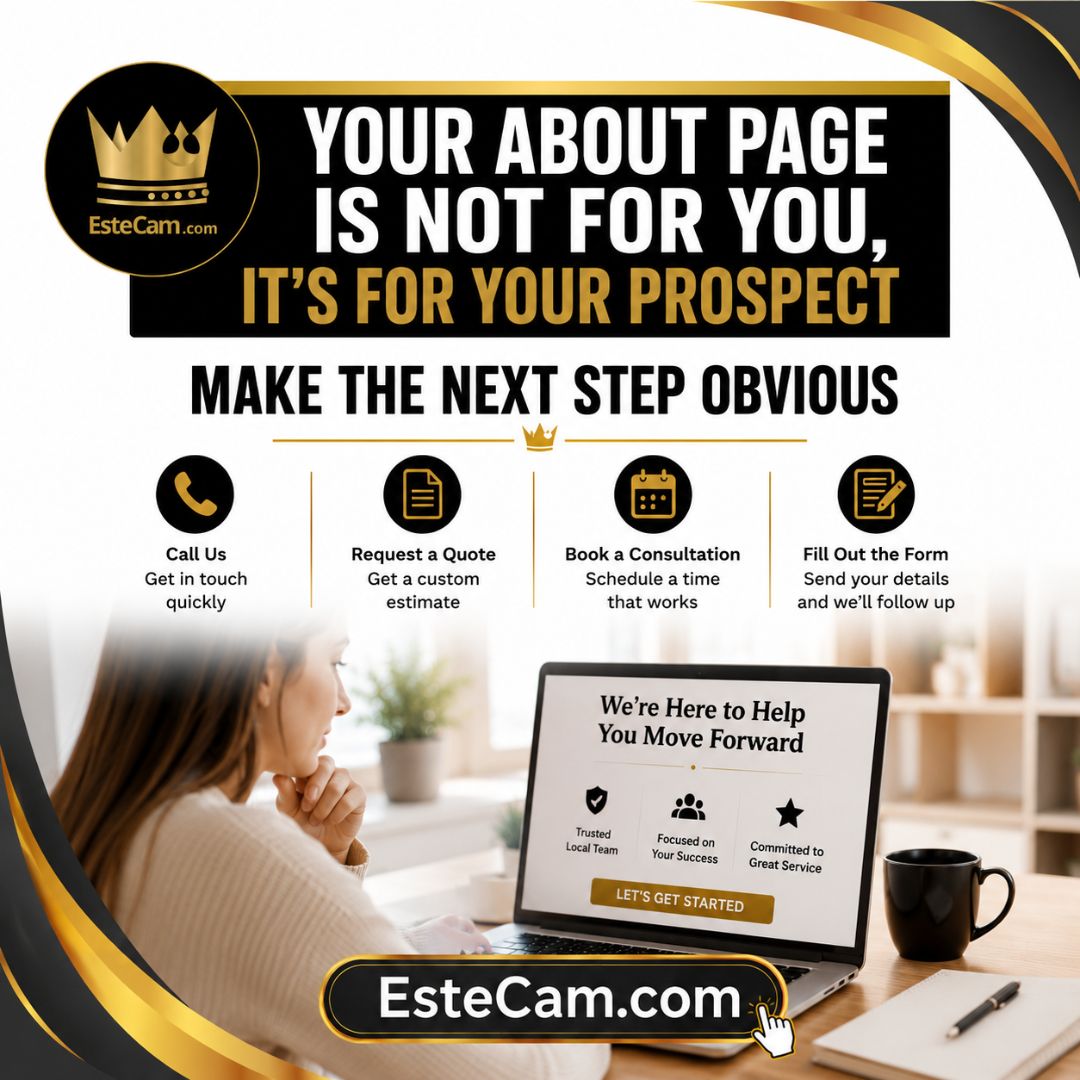
Make the Next Step Obvious
One of the biggest About page mistakes is ending with no direction.
After someone reads about your business and feels more comfortable, what should they do next? Call? Request a quote? Book a consultation? Visit the store? Fill out a form?
Your call-to-action should match the purpose of your website. If your website is built for lead generation, the About page should guide visitors toward becoming a lead.
This does not mean you need to be pushy. It just means you should not leave people guessing.
Keep It Clear and Easy to Read
Do not make the page only about your awards, history, or personal journey. Those details can help, but only if they connect back to the customer.
Avoid generic phrases like “we are passionate about excellence” without explaining what that means. Plain English works better.
Use short paragraphs, clear headings, and simple sections so the page is easy to scan on a phone. If you serve a specific area, mention your location or service area naturally because it can support local SEO and help nearby customers know they are in the right place.
A Better Page Builds Trust Before the Sale
Your About page is not just a place to talk about your business. It is a chance to help your prospect feel understood, informed, and comfortable.
When you write it with the customer in mind, the page becomes more useful. It explains who you help, why your work matters, what makes your approach different, and what the visitor should do next.
That is what good website strategy is supposed to do. It turns attention into trust, and trust into action.
Ready to make your business look more professional online? Start My Free Website with EsteCam.
