
AI-Generated Content and Customer Trust: What Matters
AI-Generated Content Is Easy. Earning Trust Is Harder.
You ask an AI tool to write a social media post for your business. Seconds later, you have a polished caption, a catchy headline, and a call to action. It looks ready.
But would a potential customer believe it?
AI-generated content can help small businesses create marketing materials faster. Earning customer trust is a different job. People need accurate information, specific answers, and reasons to believe your business. Polished words cannot replace those things.
The goal is to use AI without losing your credibility.

AI Can Draft Your Message, Not Prove Your Claims
AI can outline blogs and turn notes into readable copy. It does not automatically know your services, availability, policies, or processes.
Imagine a roofing contractor posting, “We guarantee same-day repairs for every customer,” because an AI tool suggested it. If the contractor cannot fulfill that promise, polished writing becomes a customer-service problem.
Check every claim a buyer might use to decide. A statement must be supportable, not just convincing.
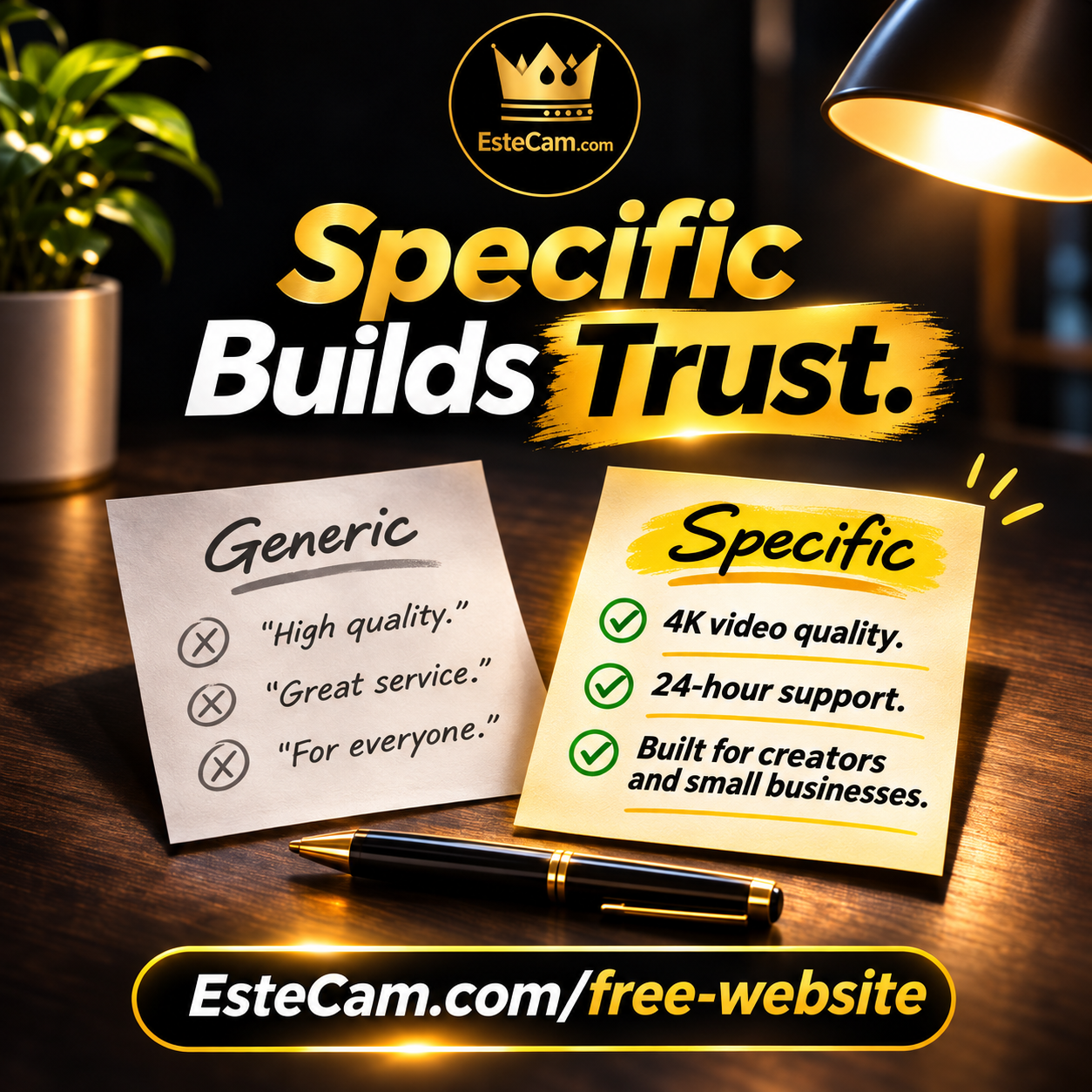
Generic Content Leaves Customers With Questions
Phrases like “exceptional service,” “industry-leading solutions,” and “customer satisfaction is our priority” may sound professional. They rarely explain why someone should choose you.
Customers want details: What do you offer? Who is it for? What happens when they contact you? How can they see examples of your work?
Consider this hypothetical cleaning business example:
Generic AI draft: “We deliver premium cleaning solutions tailored to your needs.”
More helpful version: “We clean apartments and small offices. Tell us your space size and preferred date, and we’ll explain the available service options before you book.”
The second version does not make a grander promise. It explains the next step.

Add Details Only Your Business Can Provide
The strongest material often comes from information you already have: common customer questions, service boundaries, photos of actual work, your process, and explanations from your team.
Use AI to organize those details rather than invent them. For completed projects, explain the work and use genuine, authorized photos. If you share a customer review, use the customer's real words with appropriate permission. Never manufacture reviews, case studies, or results.
For related guidance, see why your marketing offer matters. A clear offer gives every AI-assisted draft something real to communicate.
Make Your Website a Place to Verify Your Message
A social post may introduce a business, but interested customers often look for more before they inquire. Your website should make it easy to find your services, contact information, process, and answers to practical questions.
Keep the same core message across your website, social profiles, and follow-up emails. If an AI-written caption promises one service while your website describes another, people may hesitate.
Your homepage can establish whom you help; a landing page can explain a specific next step. See the difference between a homepage and a landing page for a practical comparison.
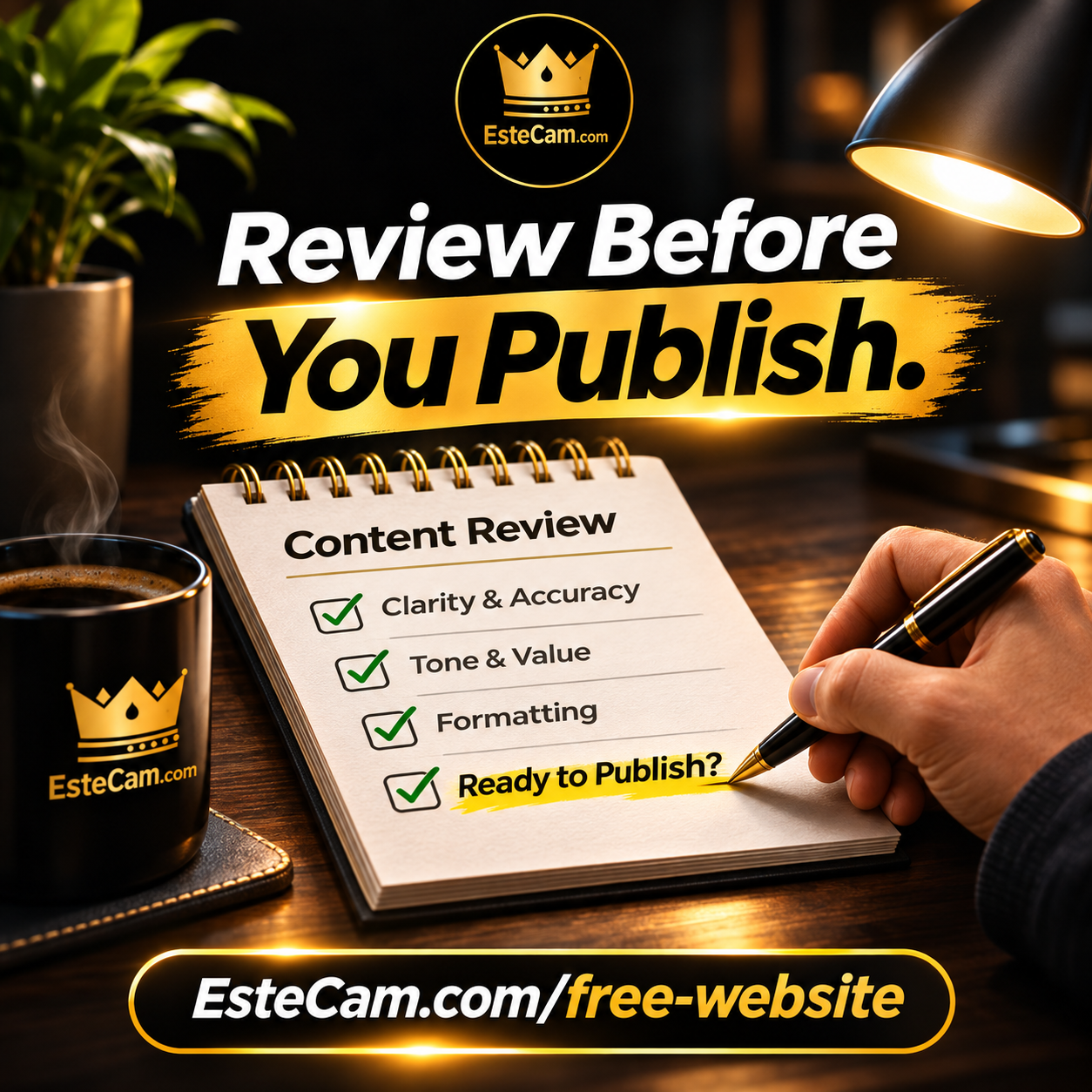
Review AI Content Like a Business Owner
Before posting, ask: Is every detail accurate? Does this sound like us? Would a first-time customer understand it? Can we fulfill the promise? Is the next step clear?
Check names, service areas, prices, quotes, and links. Replace filler with specifics. Have someone familiar with the business approve important content, especially anything involving policies, costs, or customer outcomes.
AI can speed up production. Your judgment protects the relationship that content is meant to start.
Trust Comes From What You Can Back Up
You need not write every word from scratch, but you must stand behind what you publish. Useful content earns attention; accurate details and consistent experiences give customers reasons to trust you.
Ready to make your business look more professional online? Start My Free Website with EsteCam.
Frequently Asked Questions
1. Is it okay to use AI for my small business website?
Yes. AI can help organize and draft website copy, but a person should verify the details and make sure it accurately reflects the services customers will receive.
2. Can customers tell when a post was written by AI?
Not always. Generic wording may feel impersonal, but no simple writing test reliably proves authorship. Focus on whether the post is useful and truthful.
3. Can AI invent information about my business?
Yes. It may confidently add unsupported details, services, prices, or guarantees. Compare every factual claim against your actual business information before publishing.
4. Do I have to disclose AI-assisted writing?
Disclosure expectations depend on the context and applicable rules. When the creation process would matter to a customer's understanding, be transparent about how AI was used.
5. How can I make AI content sound more human?
Give it your real customer questions, preferred vocabulary, and actual process. Then edit the draft for clarity, natural tone, and details your audience cares about.
6. Can I use AI to generate customer testimonials?
Do not publish invented testimonials as genuine customer feedback. Ask real customers for honest reviews, and present their experiences accurately without changing the meaning.
7. Are AI-generated images bad for business credibility?
Not necessarily. They can illustrate ideas, but avoid presenting generated scenes as photos of real projects, employees, products, or customer results.
8. When should I update AI-written website content?
Review it whenever services, policies, staff, or contact details change. Periodic checks also help you catch outdated claims and broken links.
9. Does Google automatically penalize AI-generated content?
No. Google's guidance focuses on helpfulness, originality, and accuracy rather than banning AI assistance. Automatically publishing large amounts of low-value content can create problems.
10. What should I fix first if my AI posts sound generic?
Start with content that introduces your services or makes important promises. Replace vague claims with verified specifics and give readers a clear next step.
